Berkeley, CA · Elmwood · Jewelry & Native American arts · Founded 1939
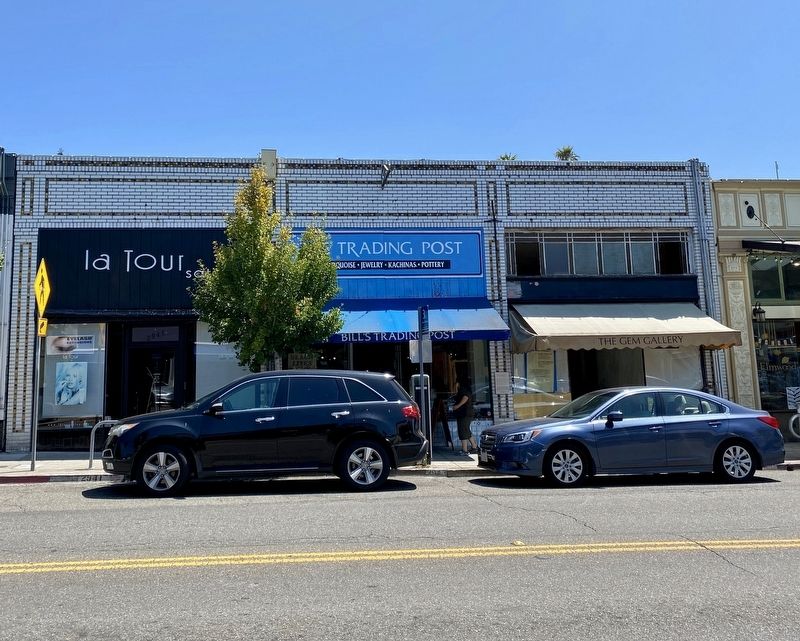
Bill's Trading Post
Interviewed 2026
History
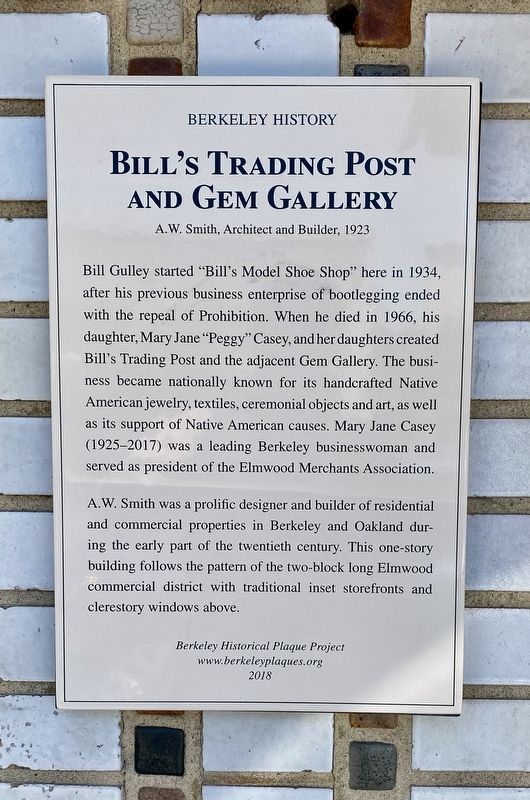
Bill’s Trading Post began when Bill Gulley, the great-grandfather of the current owner, opened Bill’s Model Shoe Shop around the mid-1930s. He received a loan from his wife’s aunt, who had worked steadily through the Depression and had a little to spare. He and Caroline Gulley worked together with some helpers until 1964, when he passed away. Then, their daughter, Peggy Casey, came in to help her mother with the shoe shop.
However, after realizing she didn’t care for shoe repair, Peggy Casey worked with Janet Dunlap and Larry Casey to make leather clothes, belts, sandals, and wallets. The first jewelry they started to carry was from Northern California Native artists. Their beautiful beadwork went well with the leather clothes and the times. Peggy Casey kept expanding the business well beyond leather clothing.
Before the Alcatraz occupation in 1969, she was buying mostly California Native beadwork, but when Indigenous groups took a stand by claiming Alcatraz Island, she was very supportive of the different groups who came from across the country. A lot of them brought what they could to sell, and they sold to her. She then became introduced to many different artists and tribal associations and brought much more Native jewelry and artwork into the shop. On the 30th anniversary of the occupation, they presented her with the key for safekeeping as thanks for her support. The key is still in the shop today.
Over time, the leather clothing faded out and the jewelry and artwork became the focus of the business, an organic evolution of the shop. Today, the shop still carries beautiful jewelry and art created by Native artists locally and from afar, maintaining its support of Indigenous craftwork across North America.
BILL’S TRADING POST, A BERKELEY LANDMARK
About the Interviewee
Julie Ewer is the fourth generation to own Bill’s Trading Post. As the owner, she sources and curates the inventory that makes Bill’s so special. She is also a jeweler who makes custom, one-of-a-kind jewelry.
Economy and Changes Over Time
As the economy has fluctuated up and down, and after being closed during COVID, the business has changed. Bill’s Trading Post is now a smaller shop than it used to be, at half the size. It no longer offers repair services or has employees. The focus has changed by necessity to survive.
Community
After all the ups and downs, Bill’s Trading Post still sells and supports the Native jewelry and arts community near and far. Thanks to its loyal customers, the shop is still in business and has survived many decades in Berkeley.